

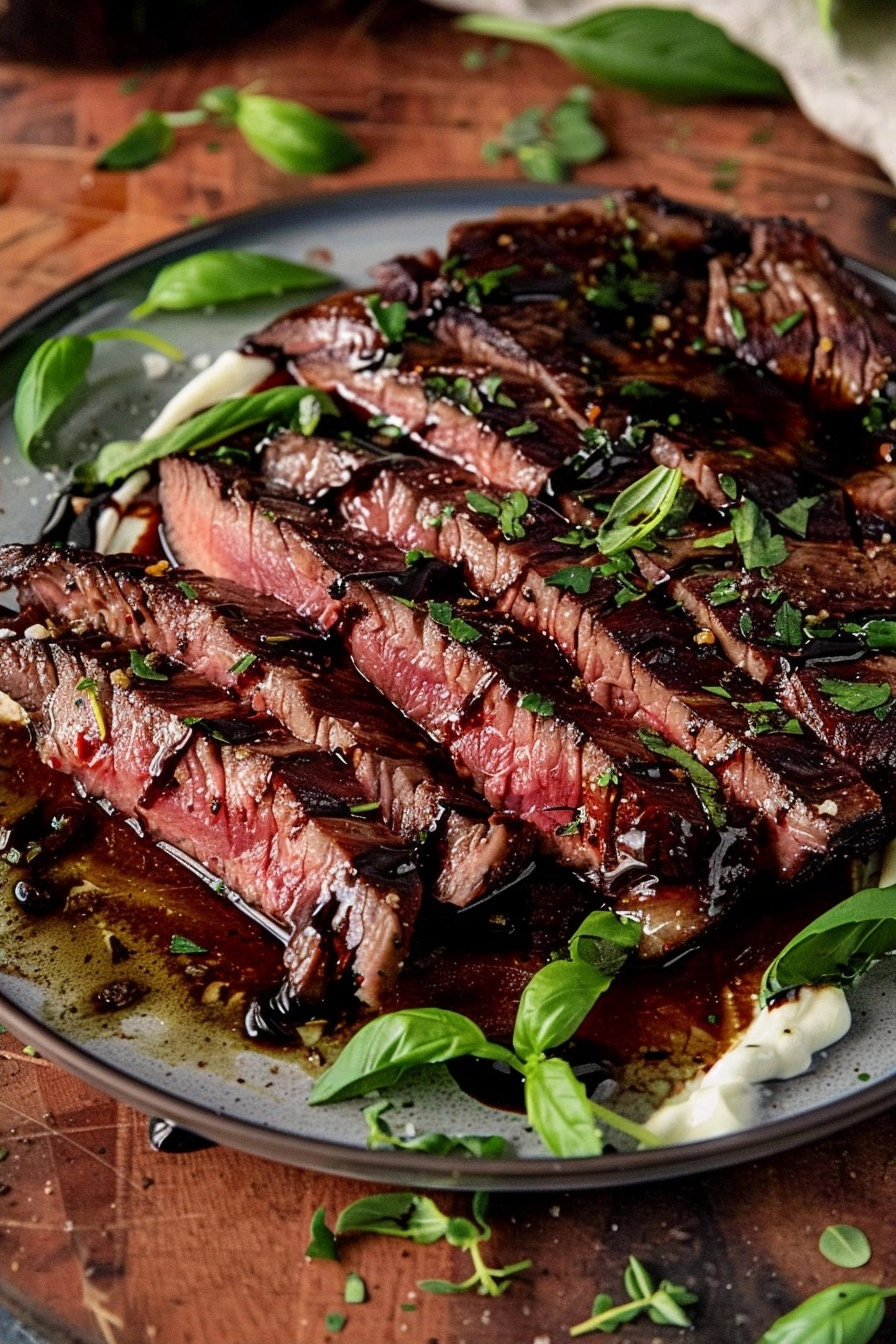
Balsamic flank steak delivers a perfectly caramelized, tender dinner featuring a rich, tangy glaze that transforms lean beef into a succulent main course. This recipe relies on a simple marinade to break down the fibers of the steak while infusing deep, complex savory notes into every bite. It is a straightforward meal that offers restaurant-quality results with minimal prep time.
Table of Contents
Table of Contents
Why You’ll Love This Balsamic Flank Steak
This dish succeeds because it balances the intense, earthy iron flavor of the steak with the sharp sweetness of aged balsamic vinegar. The marinade acts as both a flavor enhancer and a tenderizer, ensuring the meat stays juicy even when seared over high heat. It brings a sophisticated edge to a weeknight meal without requiring complicated culinary techniques.
You will appreciate the textural contrast achieved by the sear. The balsamic sugars caramelize quickly, creating a dark, flavorful crust on the exterior while the center remains a tender, buttery pink. It is a satisfying experience that works just as well for a quick family dinner as it does for a dinner party with friends.
Efficiency is another key advantage of this recipe. Because flank steak is relatively thin, it cooks in minutes, making it an excellent choice for busy schedules. You can prepare the marinade ahead of time, allowing the beef to rest in the fridge until you are ready to sear it. Serve it sliced against the grain for the most tender experience imaginable.
Ingredients of the Balsamic Flank Steak
For the Marinade and Steak
- 1.5 lbs beef flank steak
- 1/3 cup balsamic vinegar
- 1/4 cup extra virgin olive oil
- 3 cloves garlic, minced
- 1 tablespoon fresh rosemary, finely chopped
- 1 tablespoon honey
- 1 teaspoon salt
- 1/2 teaspoon cracked black pepper
For Serving
- Fresh parsley, chopped
- Flaky sea salt
Equipment / Tools Needed
- Large glass bowl or heavy-duty sealable plastic bag
- Heavy-bottomed cast iron skillet
- Tongs
- Chef’s knife
- Cutting board
- Whisk
Step-by-Step Instructions
Step 1: Prepare the Marinade
In a medium mixing bowl, whisk together the balsamic vinegar, olive oil, minced garlic, rosemary, honey, salt, and black pepper. Ensure the honey is fully dissolved into the vinegar mixture to create a uniform, dark emulsion that smells deeply fragrant and slightly sweet.
Step 2: Marinate the Steak
Place the flank steak in a large sealable bag or shallow glass dish. Pour the marinade over the meat, ensuring every surface is thoroughly coated. Seal the container and refrigerate for at least two hours, though four to eight hours is ideal for the best flavor penetration and tenderness.
Step 3: Sear the Steak
Remove the steak from the refrigerator thirty minutes before cooking to bring it closer to room temperature. Heat a large cast iron skillet over medium-high heat until it is smoking slightly. Carefully place the steak in the hot pan; it should immediately emit a loud, vigorous sizzle. Sear the meat for 4 to 5 minutes per side, depending on thickness, until a dark, mahogany-colored crust forms.
Step 4: Rest and Slice
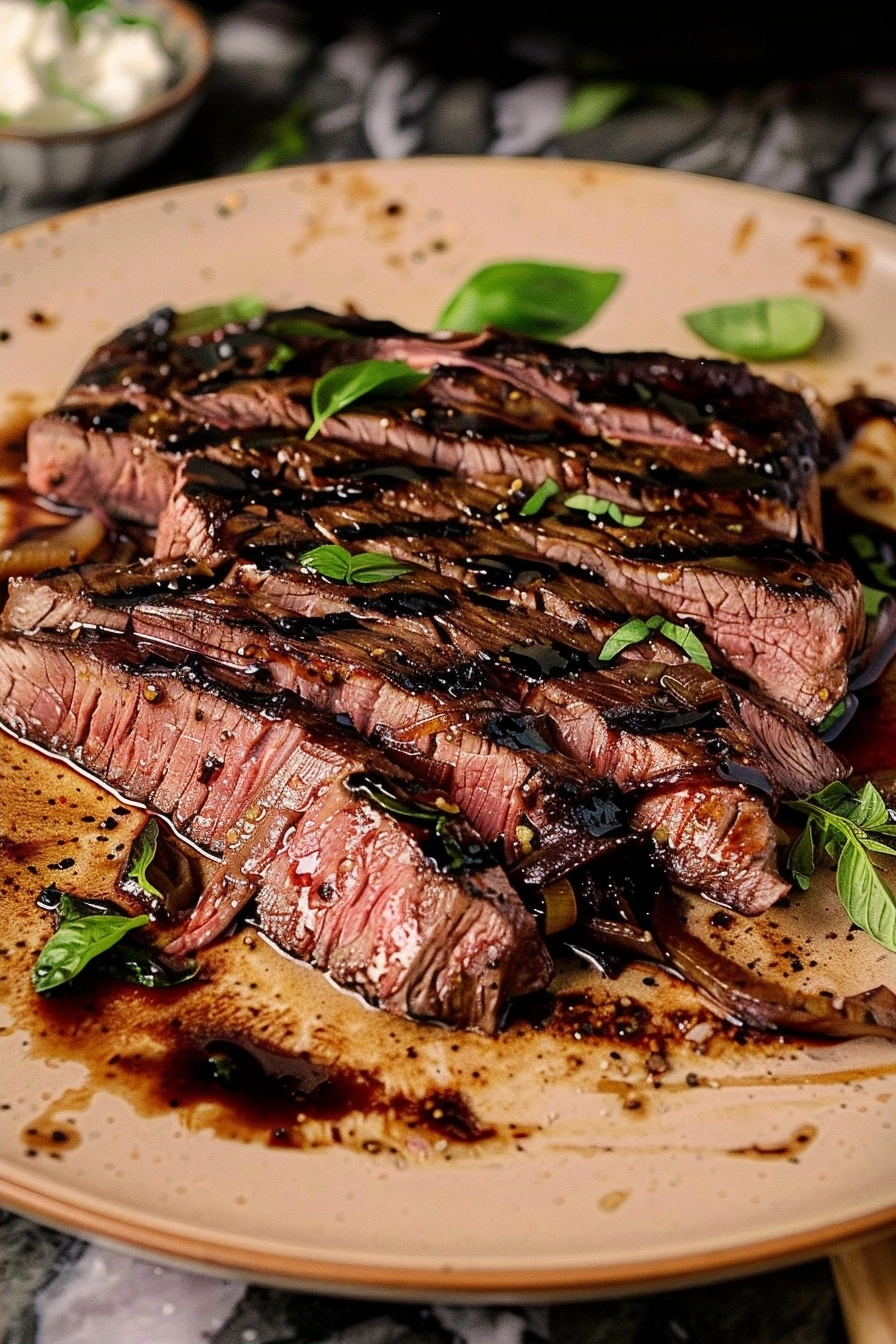
Transfer the cooked steak to a clean cutting board and tent it loosely with aluminum foil. Let the meat rest for at least 10 minutes to allow the juices to redistribute throughout the fibers. Using a sharp knife, slice the steak thinly against the grain to ensure a tender texture in every bite.
Tips & Tricks
Always slice against the grain to ensure the meat is easy to chew. Look for the lines of muscle fiber running across the steak and cut perpendicular to them. Bringing the meat to room temperature before hitting the pan prevents the exterior from burning while the interior remains cold. If you enjoy a thicker glaze, pour the leftover marinade into a small saucepan and simmer it until reduced by half, then drizzle over the finished slices.
Serving Suggestions
This steak pairs beautifully with roasted root vegetables or a crisp arugula salad dressed with a light lemon vinaigrette. For a heartier meal, serve it alongside creamy mashed potatoes or a side of garlicky sautéed spinach. It is particularly delicious during summer months when served alongside fresh, grilled summer squash.
Variations / Substitutions
If you prefer a different herb profile, swap the rosemary for fresh thyme or oregano. For a touch of heat, add a pinch of red pepper flakes to the marinade. If honey is unavailable, pure maple syrup provides a similar depth of sweetness that complements the acidity of the balsamic vinegar wonderfully.
Storage and Reheating
Store leftover slices in an airtight container in the refrigerator for up to three days. To reheat, warm the slices gently in a skillet over low heat with a splash of beef broth or water to keep them moist. Avoid using the microwave, as it often results in chewy, overcooked meat.
Nutritional Info
Calories: 320 kcal
Protein: 32g
Carbohydrates: 6g
Fat: 18g
Conclusion
Balsamic flank steak stands out as a reliable, flavorful meal that brings elegance to the table with minimal effort. The combination of high-heat searing and a tangy, acidic marinade creates a result that is both refined and comforting.
Enjoy the process of cooking this dish and appreciate how simple ingredients transform into such a vibrant final product. With a little patience during the marination process, you are guaranteed a dinner that impresses every time.
FAQ
How long can I marinate the flank steak?
You can safely marinate the steak for up to 24 hours. Anything longer than that may cause the texture of the beef to become overly mushy due to the acidity of the vinegar.
Can I grill this instead of using a skillet?
Yes, this recipe is excellent on an outdoor grill. Prepare the grill for high, direct heat and cook for 4 to 5 minutes per side, just as you would in a skillet.
What if I do not have fresh rosemary?
You can substitute dried rosemary, but use only one teaspoon as it is more potent than fresh. Alternatively, dried thyme or a teaspoon of Italian seasoning works well.
Is this recipe suitable for meal prep?
This is a great meal prep option. You can marinate the steak and freeze it in the bag for up to one month. Thaw it completely in the refrigerator before following the cooking instructions.
Balsamic Flank Steak
Ingredients
- 1.5 lbs beef flank steak
- 1/3 cup balsamic vinegar
- 1/4 cup extra virgin olive oil
- 3 cloves garlic, minced
- 1 tablespoon fresh rosemary, finely chopped
- 1 tablespoon honey
- 1 teaspoon salt
- 1/2 teaspoon cracked black pepper
- Fresh parsley, chopped for garnish
- Flaky sea salt for finishing
Instructions
- In a medium bowl, whisk together the balsamic vinegar, olive oil, minced garlic, rosemary, honey, salt, and pepper.
- Place the flank steak in a sealable bag or dish and pour the marinade over it, ensuring it is fully coated.
- Refrigerate for at least two hours, ideally 4 to 8 hours.
- Remove steak from the refrigerator 30 minutes before cooking to bring it closer to room temperature.
- Preheat a heavy-bottomed cast iron skillet over high heat.
- Remove the steak from the marinade, pat it dry slightly, and place it in the hot skillet.
- Sear for 4 to 6 minutes per side, depending on desired doneness, until a deep dark crust forms.
- Remove from the skillet and let the meat rest for 10 minutes before slicing against the grain.
Notes
Letting the steak rest is critical to keeping the juices inside the meat.
Adjust the sear time based on your preferred level of doneness, aiming for 130°F for medium-rare.